7.4.09
22.3.09
Darfur, Abar Ali, and the Western Conspiracy
لعل البعض يظن أنها سميت أبيار علي نسبة لعلي بن أبي طالب رضي الله عنه، وهذا غير صحيح والصحيح أنها سميت بذلك نسبة لعلي بن دينار. وعلي بن دينار هذا جاء إلي الميقات عام 1898م حاجاً ( أي منذ حوالي مائة عام )، فوجد حالة الميقات سيئة، فحفر الآبار للحجاج
I have read this piece on the connection between the locality Abar Ali (the Wells of Ali) and the Darfur Sultan, and found it rather suspicious. Years ago I with a group of friends have made a study of the localities connected to the life of Prophet Muhammad PBUH to add it to Google Earth and I recall reading about Abar Ali, I recall it was connected to the Darfur Sultanate in the sense that Ali Bin Dinar did renovate it, but its name as Ali was much older than this, most ppl actually link it to Ali bin Abu Talib.
It seems this email and article has found lots of popularity on the net, understandigly because many muslims are eager to put the issue of Darfur in the context of an anti-Muslim Western campain, which is true partially in the sense that powers may be trying to get advantage from the Sudanese internal ills, but is a too superficial way to look at such a chronic devastating conflict as the one in Darfur.
I have looked for the subject and found that most Islamic archeology researcher do reject this new claim that the wells were dug by the Darfur sultan.The article is a very naive simplification of the complex issue of Darfur, and repeats the the usual Arabic defense mechanism of the conspiracy theory.
A Muslim Sultanate for hundreds of years, not only 19 years as the article claims. The Sultans of Darfur were most of the time not Arabs, but African in ethnicity. It is when Arabs in Khurtoom began governing Darfur that the native Africans became irritated.
The African Darforians, the Fur, are settled farmers in the middle of Darfur, while the Arabs are mostly nomards in the north and south, The Baqqara and Janjawid. Not the other way round as the article claims.
The Darfur national sentiments started since hundreds of years before the establishment of the modern Sudan, its not a new problem as the article argues.
The article ignores the roots of the problem in Darfur, which is purely racial. It is true that most Darfurians are Muslims, but they are divided between Arabs and Africans and the African Muslims see, since many years, that they have been oppressed by the central government and by neighboring Arabic tribes.
The article, like all the current political Islamic rhetoric nowadays, underestimates the tragedy of Darfur in the same way it underestimated the human rights violations under Taliban . What happened in Darfur is not a skirmish between tribes over water, it is a major catastrophe in all proportions. Millions were deported, injured or killed. (all Muslims of course).
However, the article is correct in one thing, it is that we Muslims and Arabs have turned a blind eye to the tragedy of our fellow Muslims in Darfur.
Here are some more Info regarding the subject.
نشرت العديد من مواقع الإنترنت على الشبكة العنكبوتية، خطبة إحدى الجمع منسوبة إلى الدكتور صفوت حجازي -والله أعلم بصحة نسبة هذا القول إليه-، وقد تضمنت معلومات تاريخية عن سبب تسمية ميقات ذو الحليفة (1) باسم: آبار علي. وأن التسمية جاءت نسبة إلى السلطان علي دينار سلطان دار فور المتوفى سنة 1335هـ، الذي قدم إلى ميقات ذو الحليفة سنة 1315هـ، فوجد حالة الميقات سيئة، فحفر الآبار للحجاج، وجدد مسجد ذي الحليفة، ولذلك سمي المكان آبار علي نسبة إلى علي بن دينار.
ورغم أن تسمية ميقات ذو الحليفة باسم: آبار علي ونسبة تلك التسمية إلى السلطان علي بن دينار، هو خطأ تاريخي، غير أن بعض الكتاب في بعض المواقع الإلكترونية قاموا بنقل ونشر تلك المعلومة الخاطئة على أنها معلومة حقيقية مسلم بها، لا تقبل التحقيق أو التدقيق في صحتها، دون أن يكلف أحدهم مناقشة سبب تلك التسمية، أو زمن ظهورها.
وبمناقشة صحة سبب تسمية ميقات ذو الحليفة باسم: آبار علي نسبة إلى السلطان علي بن دينار المولود سنة 1275هـ تقريباً، والمتوفى سنة 1315هـ، على عدد من المصادر التاريخية، وكتب الرحلات، وجدت عدم صحة هذه التسمية المنسوبة إلى السلطان علي بن دينار.
قال جمال الدين المطري (1) المتوفى سنة 741هـ، حيث قال ما نصَّه:
(ثم يأتي على غربي جبل عير، ويصل إلى بئر علي ذي الحليفة محرم الحاج (2).
وقال الجزيري (3) الذي كان على قيد الحياة سنة 977هـ، ما نصَّه:
(ثم يرحل إلى ذي الحليفة، ويسميه الحاج بئر علي، وهو ميقات الحج الشامي، ومن مرّ على المدينة، وهو على مرحلة منها، وبه آبار كثيرة بإزاء وادي العقيق، ومنه يحرم الحاج ويهلُّون بالتلبية (4).
وقال المكناسي (5) المتوفى سنة 1213هـ، ما نصَّه:
(فسرنا ساعتين، ووصلنا ذا الحليفة، ويسمى اليوم ببيار علي لأن هناك آبار كثيرة، فنزل الناس هناك، وابتنوا الخيام، واستقى الناس الماء (6).
ومن خلال النصوص السابقة نجد عدم صحة تسمية ذي الحليفة باسم: آبار علي نسبة إلى السلطان علي بن دينار المولود سنة 1275هـ تقريباً، ذلك أن التسمية كانت معروفة قبل مولد السلطان علي بن دينار، ذلك أن تسمية ذي الحليفة باسم: آبار علي كانت معروفة قبل مولد السلطان علي بن دينار.
والله سبحانه وتعالى أعلم وصلى الله على نبينا محمد وعلى آله وصحبه وسلم.
الهوامش والتعليقات الجانبية:
(1) ذو الحليفة: قرية بظاهر المدينة على طريق مكة، بينها وبين المدينة تسعة أكيال، تقع بوادي العقيق عند سفح جبل عير الغربي، ومنها تخرج في البيداء تجاه مكة، وتعرف اليوم ببيار علي، وهي ميقات أهل المدينة ومن مرّ بها، ومسجد الشجرة بها معروف إلى الآن، بها مدارس ومساجد، ومقاهٍ كثيرة. (عاتق بن غيث البلادي: معجم معالم الحجاز، دار مكة للنشر والتوزيع مكة المكرمة، الطبعة الأولى، 1400هـ - 1980م، ج4، ص ص 48-49).
(2) المطري: هو محمد بن أحمد بن محمد بن خلف الخزرجي، الأنصاري، السعدي، المدني، أبو عبدالله، جمال الدين، نسبته إلى المطرية بمصر. ولد في المدينة المنورة سنة 671هـ. فاضل، عارف بالحديث، والفقه، والتاريخ، ولي نيابة القضاء بالمدينة المنورة. توفي بالمدينة المنورة سنة 741هـ. (خير الدين الزركلي: الإعلام، دار العلم للملايين، بيروت، الطبعة الرابعة عشر، 1999م، ج5، ص ص 325-326).
(3) جمال الدين محمد بن أحمد المطري: التعريف بما أنست الهجرة من معالم دار الهجرة، تحقيق أ.د. سليمان الرحيلي، دارة الملك عبد العزيز، الرياض، د.ط، 1426هـ - 2005م، ص 167
(4) الجزيري: هو عبدالقادر بن محمد بن عبدالقادر الأنصاري الجزيري الحنبلي. ولد سنة 880هـ، باحث حنبلي مصري، له من المصنفات: (درر الفرائد المنظمة في أخبار الحاج وطريق مكة المعظمة)، (خلاصة الذهب في فضل العرب)، وغير ذلك. توفي نحو سنة 977هـ. (الزركلي: الإعلام، ج4، ص 44).
(5) عبدالقادر بن محمد بن عبدالقادر الأنصاري الجزيري الحنبلي: الدرر الفرائد المنظمة في أخبار الحاج وطريق مكة المعظمة، تحقيق محمد حسن محمد حسن إسماعيل، دار الكتب العلمية، بيروت، الطبعة الأولى، 1422هـ-1922م، ج2، ص 65.
(6) المكناسي: هو أبو عبدالله محمد بن عبدالوهاب بن عثمان، وزير رحالة من الكتاب البلغاء، من أهل مكناسة، استخدمه محمد بن عبدالله في بعض الأعمال، ثم جعله وزيراً وانتدبه لكثير من المهمات وعقد المعاهدات، فكان سفيره في إسبانيا، ثم في مالطا ونابولي والآستانة، وسفيره إلى امبراطور النمسا، توفي في مراكش سنة 1213هـ. له من المصنفات: (الإكسير)، (إحراز المعلى والرقيب)، وغير ذلك. (الزركلي: الإعلام، ج6، ص ص 257-258).
(7) محمد بن عبدالوهاب المكناسي: رحلة المكناسي: إحراز المعلى والرقيب في حج بيت الله الحرام وزيارة القدس الشريف والخليل والتبرك بقبر الحبيب، حققها وقدم بها محمد بو كبوط، دار السويدي للنشر والتوزيع، أبو ظبي، الطبعة الأولى، 2003، ص 261.
باحث تاريخي
محمد بن حميد الجحدلي الحربي
--------
| في حين نسبها البعض لـسلطان دارفور "علي بن دينار" |
| |
| المدينة المنورة: خالد الطويل |
| احتدم الجدل بين الباحثين حول صحة نسبة ميقات أهل المدينة المنورة"ذي الحليفة" والذي اشتهر بـمسمى"أبيار علي" جنوب غرب المدينة، بعد خروج آراء بحثية تنسبه لسلطان "دارفور "علي بن دينار الذي جاء إلى ميقات المدينة المنورة حاجا سنة 1889. ففي حين يرجع الباحث في تاريخ المدينة المنورة الدكتور تنيضب الفايدي نسبتها إلى علي بن دينار والذي قام بحفر بعض الآبار للحجاج والزوار في تلك المنطقة، مشيرا إلى أنها كانت تعرف من قبل ذلك التاريخ بـ"ذي الحليفة"، ومسجد الشجرة, يقف أمين عام مجلس المرصد الحضري والباحث في آثار المدينة المهندس حاتم طه في اتجاه آخر حيث ينفي صحة ذلك الرأي مؤكدا أن آبار علي تعود في نسبتها- بحسب المصادر التاريخية القديمة- وبعض المعاصرين إلى علي بن أبي طالب- رضي الله عنه. ويرى طه أن تلك الحقيقة لا تمنع من أن سلطان "دارفور" قام بحفر بعض آبارها وتجديدها على طريقة كثير من الحكام الذين كان يهمهم أن تكون لهم بصمة في بلاد الحرمين, ويكفي حسما لتلك القضية-بحسب تعبيره- أن سلطان دارفور لم يأتها زائراً إلا في سنة 1889, بينما عرفت المنطقة بذلك الاسم التاريخي منذ صدر الإسلام الأول. من جهته يرى الباحث ناجي بن تركي الهجاري أنه بالعودة إلى المصادر القديمة نجد أنها تشير إلى أن نسبة الوادي والآبار إلى علي بن أبي طالب والذي حفرها في زمن النبي صلى الله عليه وسلم. ويشير الهجاري إلى عدد من الروايات التي تؤكد شواهدها أنها عرفت بآبار علي من قبل سلطان دارفور بعشرات السنين، ومن بينها-والحديث للهجاري- الروايات التي ذكرها ابن حجر في فتح الباري، وما ذكره عنها شيخ الإسلام "ابن تيمية" صاحب عمدة الفقه في الرواية التي ينفي فيها الأخير مقاتلة علي بن أبي طالب للجن كما تزعم العامة. ويقف متوسطا بين تلك الآراء البحثية رأي عضو هيئة التدريس بجامعة طيبة صاحب كتاب "الطريق النبوي إلى بدر" الدكتور سليمان الرحيلي والذي ينفي فيه صحة نسبة الآبار إلى علي بن دينار "لأن التسمية سابقة فترته التاريخية التي جاء فيها إلى المدينة حاجا" إلا أنه في ذات السياق يؤكد أنها لم تثبت أيضا بحسب قول القدامى والمحدثين بأنها منسوبة لعلي بن أبي طالب وقد نص على ذلك -والحدث للرحيلي- مؤرخ المدينة السمهودي في كتابه وفاء الوفاء. ويتقاطع الرحيلي مع رأي الفايدي في أن الثابت تاريخيا أن آبار علي كانت تسمى في المصادر القديمة بـ"ذي الحليفة"، ومسجد الشجرة. وبحسب رصد الـ"الوطن" فقد ورد مسمى" آبار علي" في أكثر من وثيقة تاريخية من وثائق المحكمة الشرعية بالمدينة المنورة، والتي نشر جزءاً منها الباحث فايز بن موسى البدراني في كتابه "بعض الأعيان وأعلام القبائل في وثائق المحكمة الشرعية بالمدينة المنورة خلال العهد العثماني" حيث تشير إحدى مخطوطات وثائق المبايعة إلى موقع "آبار علي" بظاهر المدينة الشريفة وذلك بحسب صيغة الوثيقة المؤرخة بتاريخ/1/11/1077 ما يؤكد أنها عرفت بذلك الاسم قبل أن يأتي إليها ابن دينار بعشرات السنين. |
أظن أن الجميع يعرف المدينة المنورة ولعل بعضنا يعرف أبيار علي، وهي ميقات أهل المدينة
المنورة الذي ينوي عنده ويحرم من أراد منهم الحج أو العمرة من هناك و منهم اهل بلاد الشام . وكانت تسمي في زمن النبي صلى
الله عليه وسلم ذي الحليفة
ولعل البعض يظن أنها سميت أبيار علي نسبة لعلي بن أبي طالب رضي الله عنه، وهذا غير صحيح
والصحيح أنها سميت بذلك نسبة لعلي بن دينار.
وعلي بن دينار هذا جاء إلي الميقات عام 1898م حاجاً ( أي منذ حوالي مائة عام )، فوجد حالة
الميقات سيئة، فحفر الآبار للحجاج ليشربوا منها ويُطعمهم عندها، وجدد مسجد ذي الحليفة،
ذلك المسجد الذي صلي فيه النبي وهو خارج للحج من المدينة المنورة، وأقام وعمّر هذا المكان،
ولذلك سمي المكان بأبيار علي نسبة لعلي بن دينار .
اخي الحبيب
أتدرون من هو علي بن دينار هذا؟
إنه سلطان دارفور . تلك المنطقة التي لم نسمع عنها إلا الآن فقط لما تحدث ا لعالم عنها، ونظنها أرضاً جرداء قاحلة في غرب السودان، كانت منذ عام 1898م وحتى عام 1917م سلطنة مسلمة، لها سلطان اسمه علي بن دينار.. وهذا السلطان لما تأخرت مصر عن إرسال كسوة الكعبة أقام في مدينة الفاشر (عاصمة دارفور ) مصنعاً لصناعة كسوة الكعبة، وظل طوال عشرين عاماً تقريباً يرسل كسوة الكعبة
إلي مكة المكرمة من الفاشر عاصمة دارفور
هذه الأرض المسلمة تبلغ مساحتها ما يساوي مساحة جمهورية فرنسا، ويبلغ تعداد سكانها 6ملايين نسمة، ونسبة المسلمين منهم تبلغ 99% ( والذي لا تعرفونه عنها أن أعلي نسبة من حملة كتاب الله عز وجل موجودة في بلد مسلم، هي نسبتهم في دارفور، إذ تبلغ هذه النسبة ما يزيد عن 50% من سكان دارفور، يحفظون القرآن عن ظهر قلب، حتى أن مسلمي أفريقيا يسمون هذه الأرض 'دفتي المصحف'.
وكان في الأزهر ا لشري ف حتى عهد قريب رواق اسمه 'رواق دارفور'، كان أهل دارفور لا ينقطعون
أن يأتوه ليتعلموا في الأزهر الشريف .
اخي الحبيب
وأصل المشكلة هناك في دارفور انها ارض يسكنها قبائل من أصول عربية تعمل بالزراعة،
وقبائل من أصول إفريقية تعمل بالرعي. وكما هو الحال في صحراوات العالم أجمع.. يحدث النزاع
بين الزراع والرعاة علي المرعى والكلأ، وتتناوش القبائل بعضها مع بعض في نزاع قبلي بسيط،
تستطيع أي حكومة أن تنهيه بسرعة، غير أن هذا لم يحدث في السودان، بل تطور الأمر لما تسمعونه وتشاهدونه الآن
ولكن لماذا كل هذا؟
لأن السودان هي سلة الغذاء في إفريقيا، لأن السودان هي أغني وأخصب أراضي العالم في الزراعة،
لأن السودان اُكتشف فيها مؤخراً كميات هائلة من البترول، ومثلها من اليورانيوم في شمال دارفور،
ولهذا لم يرد أعداء الإسلام لهذه المنطقة أن تنعم بالاستقرار، ولا أن تعتمد علي نفسها، فماذا يفعلون؟
يشعلون النزاعات في أنحاء البلاد ليصلوا بالأمر إلي تقسيم هذه الأرض إلي أر بع دويلات.. دولة في الغرب (تسمي دارفور) ودولة في الشرق، ودولة في الجنوب ودولة في الشمال (في جنوب مصر).
لقد نفذوا خطتهم هذه فعلاً في الجنوب، ودبّ النزاع بين الشمال والجنوب، وأقروا أن حق تقرير
المصير بانفصال أهل الجنوب سينفذ بعد خمس سنوات من الآن. وبعد أن تم لهم ما أرادوه في الجنوب، التفتوا إلي الغرب وأشعلوا فيه نار الفتنة والخلاف، سعياً وراء حق تقرير المصير هناك أيضاً، ومن المؤكد أن النزاع سيصل إلي الشرق عن قريب .
اخي الحبيب
أعرفتم الآن لماذا يذهب كارتر رئيس مجلس الكنائس العالمي إلي الجنوب دائماً؟
أتدرون أن 13 وزيراً من وزراء أوروبا وأمريكا ذهبوا إلي دارفور في الثلاثة شهور الأخيرة فقط؟
وأن آخر زوار دارفور وزير الخارجية الأمريكي؟
وبالطبع و كالعادة لا العالم الاسلامي ولا العربي يهمه الامر . فلا تحرك ولا تفاعل ولا حتى شجب أو استنكار، بل تقاعسٌ وصمتٌ رهيبٌ
ولا حول ولا قوة إلا بالله .
تلكم يا إخوتي هي قصة دارفور، الأرض العربية الاسلامية، صاحبة أعلي نسبة من حملة كتاب الله عز وجل و التي تبلغ نسبة المسلمين فيها 9 9%، أرض كانت في يوم من الأيام سلطنة إسلامية، لها سلطان عظيم اسم ه علي بن دينار، يكسو الكعبة ...
16.3.09
Israel Does Not Target the Palestinian Civilians
Israel
Does not target civilians
It only fights its evil enemies
some unavoidable civilian injury might accidentally occur
Israel Loves Palestinian Civilians
That’s why it was established on the Palestinians’ native land
Palestine
heavily populated by its native inhabitants;
the Palestinians
And because Israel adores the Palestinian civilians
It kicked the Palestinians out of their homes and occupied the place
Surprisingly, these Palestinians became refugees.
and started, rudely, resisting the occupation
They became freedom fighters,
oops,
they became terrorists.
Peaceful Israel only fights the terrorists
Israel values civilians
But to fight terrorists, it air-strikes densely populated places
by pure chance homes get destroyed and thousands killed and injured.
Israel indeed respects civilians
It kindly turned their cities into large open-air prisons
Israel has a high regard for civilians
But to discipline the terrorists, it imposes mass punishment on the population.
Examples: cutting off water supplies, long curfews and restriction of movement
Israel does NOT target civilians
But for security, it encircles the Palestinians within a wall.
Fortuitously stealing more of the Palestinian fields and water
Israel does NOT hurt civilians
But to pinpoint terrorists it uses tank shells against heavily residential areas.
By coincidence civilians are mysteriously killed in hundreds.
Israel loves civilians
But to surgically uproot terrorism it uses one-ton-bombs against neighborhoods
Surprisingly, thousands of civilians get killed and injured.
Israel adores civilians
Israel is mad about civilians
So it uses cluster bombs on their cities and villages.
By absolute coincidence kids step on them and lose their legs and arms.
Israel worships civilians
Israel finds Palestinian civilians irresistible
thus occasionally it uses phosphorus bombs and depleted uranium bombs over Palestinian cities.
civilians get burned and radiated by pure unfortunate mistake.
Israel is keen on civilians
So, the kind Israeli soldiers face demonstrations with live ammunitions
unconsciously shooting civilians in the heads and chests.
Israel is devoted to civilians
So, as an extra special treat for its beloved occupied civilians,
it generously built hundred of illegal settlements on the occupied Palestinian lands,
stealing more of the Palestinians’ land
although Israel idolizes civilians,
many ignorant people, shamelessly and audaciously, call its leaders and soldiers child killers !
Because some how,
in a mysterious way,
in an unexplained mystifying manner,
in a weird baffling pattern,
in a strange puzzling fact,
most of Israel’s victims are kids.
But, in fact, poor Israel aches for civilians
loves civilians
is fond of them
so much fond of them
so much
so much more
loves the old
and the young
the tiny
the very tiny
lonely
in pairs
in piles
Sample Statistics of Israel’s love of Palestinian civilians
The First Palestinian uprising against Israel 1987
- Civilians killed 1489
- Militants killed 10
- 99.5% civilians
The second Palestinian uprising against Israel 2000
- Civilians killed 4860
- Militants killed 800
- 86% civilians
The Israel Lebanon War, 2006.
- Civilians killed 1200
- Militants killed 250
- 83% civilians
The Israel War on Gaza, 2009.
- Civilians killed 1400
- Militants killed 100
- 93% civilians
Simple Factsof Israel’s devotion to Palestinian civilians
Palestine is tiny, half the size of Hawaii
the occupied Palestinians are 4 million people
Israel occupies Palestine for 41 years, during this time, Israel can claim to the following achievements:
- Israel killed 19,725 civilians. That’s 5 in 1000 of the Palestinian population. Or 2,000,000 two millions civilians killedin USA population scale
- Israel injured 80,000 civilians. That’s 20 in 1000. Or 8,000,000 8 millions civilians injuredin USA scale
- Israel demolished 50,000 Palestinian homes. That’s 1 in 10 of Palestinian homes. 5 million homes in USA scale
- Israel uprooted about half million olive trees. Israel is the only country in the world that uproots trees as a collective punishment
- Israel arrested 300 000 Palestinians. That is 15% of the adult Palestinian population
Israel venerates civilians
is obsessed with civilians
craves civilians
longs for civilians
desires civilians
yearns for civilians
wants them so much
covets them
is passionate about them
does NOT target them
and if these civilians get killed
it is of course the civilians’ fault.
"We can not forgive the Palestinians for forcing us to kill their children".
Golda Meir ,
Former Israeli prime minister
13.3.09
9.1.09
29.12.06
14.12.06
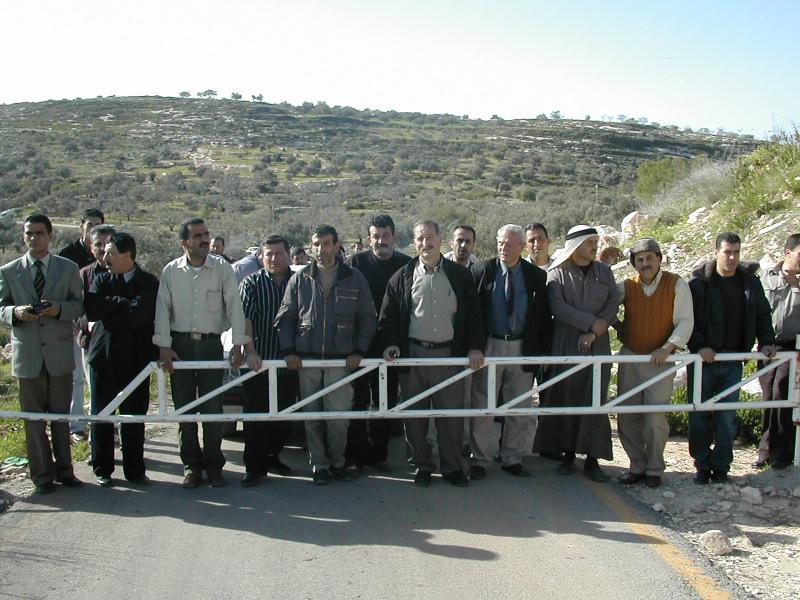
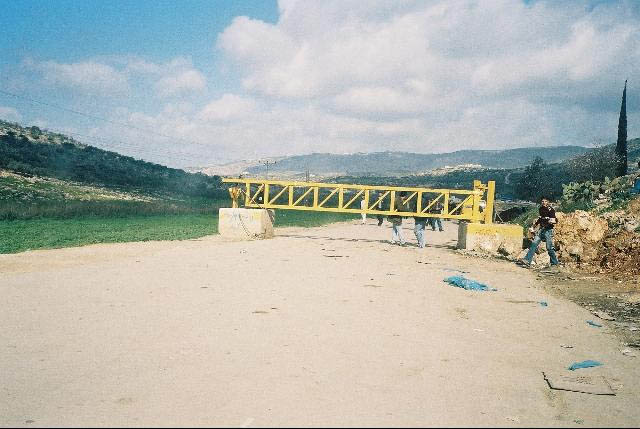
Only in Palestine, Iron Gates on the Roads
An iron gate on the road between Nablus and Tulkarm in Palestine. The gate was placed by the Israeli Army to close the road. The Israeli army used many methods to restrict the movements of Palestinians including iron gates on the roads, checkpoints, trenches, concrete blocks and others.
After closing the road by the gate, people had to leave their cars and buses at one side of the gate and wlk to the other side to take other cars and buses waiting them there.
In this pic you can see the gate and the cars on both sides.
A place mark to the site on GE can be found at This Site
I do not think in any other place in the world you will see an iron gate on the road !!
10.12.06
Aerial Photo of the village Fandaqomiyah
An aerial photo of the village Fandaqomiyah in Jenin, Palestine taken at altitude 390 meters in a sunny summer day.
5.12.06
12.11.06
8 Bullets! Weapons training for PA security forces

11.11.06
“The soldiers humiliate me. My husband beats me”
62% of palestinian women reported that they were victims of psychological violence during the year 2005.
---------------------------------------------------------------------------------------------
24% of married women in the West Bank and Gaza had been victims of domestic violence in the year 2005.
-------------------------------------------------------------------------------------------
36% said that their husbands threatened and intimidated them into submission.
------------------------------------------------------------------------------------------

52% of Palestinian mothers believed that at least one of their children (aged five to 17) was exposed to violence.
------------------------------------------------------------------------------------------

18% reported that their husbands beat them to have sex.
---------------------------------------------------------------------------------------------

47% of Palestinian women reported that their husbands used “force and brutality” during sexual intercourse. These are some shocking figures from the latest report by Human Rights Watch on the status of Palestinian women in the year 2005: A Question of Security: Violence against Palestinian Women and Girls
At a time when the Palestinian people are suffering from the Israeli occupation which inflects its abuse and violence on both males and females, young and old, it is heart breaking to find out that the majority of Palestinian women and children are facing even more abuse at the hands of those who are supposed to exchange with them love and care.
We the Palestinian are a nation fond of romanticizing our women and idealizing their role in the miraculous rebirth of our nation and its survival under the sun. Our poets wrote poems of the ever loving, ever watchful Palestinian woman on whose shoulder leans the wounded fighter and from whose hands drinks the thirsty prisoner. To us the Palestinian woman represents the Palestinian land and vise versa.
But it is an image that conceals behind it a dark reality of abuse of this woman whose full share in the fighting and suffering did not shelter her from the chronic chauvinistic ills of the Arabic culture.
It seems that not only the Israeli occupation we have to liberate ourselves from. We have our own inner circles of occupation that need as much fighting and struggle. What joy will we have in the freedom of our lands if then we leave the souls of our mothers and sisters occupied by fear and humiliation?
29.10.06
Palestine is Finally Online !
- Most comprehensive listing of all destroyed and ethnically cleansed towns.
- All of West Bank's and Gaza Strip's cities, villages, and refugee camps.
- All existing Palestinian town (including the unrecognized villages) inside Israel (Palestine-1948).
- Most the exclusive Jewish colonies (inclusive of West Bank colonies).
- The mass majority for the destroyed villages' coordinates were provided By Dr. Salman Abu Sitta based based on coordinates collected by the British Mandate in 1923.
- Israeli towns (including West Bank's exclusive Jewish colonies) were all identified from information available in the public domain, mostly from CIA maps & World Gazetteer.
- All military installation were identified from information available in the public domain, mostly from CIA maps plus al-Safir newspaper finding.
12.10.06
Hate-Mania
- "Yes, Thameen, I hate Islam because it is in direct conflict with my religion"
- "A day will come when we will slaughter the people of Denmark and smash their heads"
These two comments are just a sample of what I have been seeing and receiving in my email and on the net for a long time, but recently I became more and more aware of the amount and depth of hate that is directly associated with religious motives.
The first remark I got while I was discussing Islam's stand of certain issues with a 'nice' Christian woman from Colorado who runs an active blog . I do not usually dive into religious dialogues, but in her post she stained the Muslim culture as 'a culture that stones women' and other typical stuff that you will expect from a conservative from Colorado. But her being a nice woman with a nice blog I responded to her trying to urge her to be more open to the diversity and beautiful aspects of the Muslim experience. At one point in our discussion she was honest enough to declare her true feelings: 'Yes I hate Islam because it is in direct conflict with my religion". You can see my correspondence with her here 1 and 2 and 3
The other statement above I received in an email from a relative who is also a 'nice' Muslim woman. The email contained a poster allegedly depicting a LEGO toy showing the Prophet in a humiliating posture, the poster claims the toy to be made in Denmark. Though it is clear that this poster is fake, the email contained a prayer to "slaughter all the Danes and smash their heads". I politely responded to her that she should not be propagating hate on the internet. That was not a confused teenager but a mature educated professional person.
But as I think about these incidents and the whole multitude of what is going around us I wonder about this amount of hate that is being nurtured within religious feelings. All religious people of all religions will tell you that religion is basically about love and understanding, but this does not seem to be the case nowadays. It seems to me that many 'religious' people are giving themselves a lot of liberty in producing hate and distributing it. This is a very disappointing thing, and dangerous too. This hate is translated at many times into cruel actions and insane policies.
I think hate is a form of human failure. Hate is the fruit of fear and ignorance. It is not a comfortable thing to hate, so people who harbor hate tend to find conduits for it and thus you see people hating in the name of ideal things. Some hate in the name of religion, some in the name of pure race, others in the name of liberty. Whatever the conduit one chooses for nurturing hate, it can not beautify or legitimize hate, it can only ruin the conduit.
Hate lives in the dark corners of the human soul where it grows into a powerful monster that can lead humans into the most cruel acts and into adopting the most unjust positions. It is only thought light that hate can be eradicated from the corners of our soul. The light of knowledge, of reason and opining our minds and hearts to understanding the others. It is the powerful light of faith, the faith in an all loving God.
-------------------------------------------

NB. After posting this piece I read in the news that the Pope has just made a statement in which he asked that religion should not be used as a pretext for hate. I’m thinking of suing the Pope on copyright grounds :)
6.10.06
Prophet Muhammad on Google Earth, 1000+ Downloads
You can download the layer from here. If you do not have Google earth you can get it from here.
Islam is the second largest religion in the world; it was founded by Muhammad who was born in a town in the Arabian Peninsula, Mecca. He lived for 63 years (570-633 AD). During his lifetime, he founded the third monotheistic religion, established the core of the Muslim empire, and started a new era in Human history with its own distinctive civilization that is still alive today.
Fortunately, and unlike most other prophets of ancient times, the life of Prophet Muhammad is very well documented in great detail. It also encompasses a huge geographical area and most of the places where the prophet lived or visited are well known up to our very day. Thus I thought it is worth being illustrated on Google Earth.
This flyover contains around 110 place marks marking the geographical places where the main events of the Prophet's life happened. For those without prior knowledge of the life of Prophet Muhammad, the story told in this flyover gives a summarized and quick introduction to the life of one of the persons who had great influence on the course of humanity. For whose familiar with the life of the Prophet, this flyover gives them a new look at the life of the prophet in its geographical context.
This is a huge task that I embarked on. More additions are needed. I have put the main 110 pacemakers; however, I estimate that we can locate up to 1000 places directly connected to the life of the Prophet.
Want to help improve this project? Are you familiar with the terrain in Saudi Arabia or have a good knowledge of the life of the Prophet, You can do the following:
1.Give feedback regarding the places in this flyover correcting any misplaced place mark.
2.Correct any factual errors in the story told in the place marks content.
3.Help locate new places connected to the life of the prophet.
Your contribution is appreciated. Let’s work on this project and expand it with all the places related to the life of Prophet Muhammad. I hope this flyover will be a great educational tool and an opportunity of understanding.
For those wanting to contribute who know Arabic, There is a great website that contains all the major books on the life of the prophet including “Sirat Ibn Hisham”, and a list of all the geographical places that we intend to include in this project. It is a great start. Here is the site A great source for Arabic speakers
For English speaking persons, I will recommend the wikipedia article on Muhammad. The article gives a simple introduction. If you want more comprehensive resources, see the external links in the bottom of the article.
Technical notes:
.In dealing with sensitive issues in the life of the Prophet which are religiously or politically charged, neutral language was used as much as possible.
.The geographical locations and the narrative were based mainly on the book “Sirat Ibn Hisham” which is the most credible book on the life of the Prophet.
Jesus and Palestine
In his novel Ulysses, James Joyce knows how to counter punch the anti-Semites who harass the fictional character Leopold Bloom. When under verbal assault by the anti-Semitic citizen in Barney Kiernan's pub Bloom reminds the Christian anti-Semite that [“And Jesus was a Jew too. Your god He was a Jew like me”]. It is true, but Bloom meant it to be an offense to those who degraded the Jews.
Some Palestinians, mostly the Christian Palestinians, would like to claim their Jesus as the being Palestinian. I believe that every one has the right to claim his/her Jesus in the way she/he imagines him, the Chinese Christians’ icons display Jesus as a Chinese and that’s pretty fine. Also in the large context that Palestine is one of the many names of the land and the name preferred by the non Jewish natives since antiquity, then this claim is correct if it means that Jesus was born in this land that we later called Palestine. However, some time this claim is pregnant with polarized motives, and that does not do justice to the legacy of Jesus who transcends geographical and national debates.
It is not so important where Jesus came from; it’s what he became what is important. To me Jesus is beyond labels. As a Palestinian I to feel that labels do not do me justice. Even the name Palestinian is a label that has its historical and political limits. We are the natives of this land that I do not know what its exact name is, and that is all what I care about.
As a Palestinian I do not need to claim that Jesus was a Palestinian. He was from my land, I feel so close to him physically and spiritually because of that. I live close to where he was born and closer to where he lived and on the same hills he walked on. Every thing around here reminds me of him, the horizon, the lilies, the springs, the shepherds and of course the sky. We share a lot of things in common. Whether he was a Palestinian or whether I am a Palestinian makes no difference.
In this context I was thinking about him and I realized that Jesus was indeed the main factor why the names Palestine lived till our very day. Jesus was born to a family Jewish in ethnicity and religion. Politically he was born into the Judea province of the Roman Empire.
The land of Jesus, my land, was called by different names according to the different nations who had the final say in political domains. The land of Canaan by the Canaanites and the Egyptian Empire. The Land of Israel by the Jewish tribes. The name Phoenicia also extended to it. The Philistines lived in the south Mediterranean and their areas was the Philistine Lands, to mention only few names.
But it was actually the Romans who called it Palestine in 135 AD, the name that became international and the name I find myself identified with now after two millennia. Of course the name must have been in use by the locals before the Romans came, since Romans did not invent it from the scratch. The Roman used the name already in use by non Jewish natives in an attempt to further suppress the Jewish presence in the land after the crush of their final revolt. After the Roman conquest, the natives became citizens of the Palestine Province of the Glorious Roman Empire. Jesus the man was born in Judea, but Jesus the legend was evolving into the now Palestine.
It is very interesting to see that the word Philistine/Palestine was still alive at the time of the Romans, since the Philistines were extinct as a nation eight centuries before the arrival of the Romans. It seems that the name was still in use among non Jewish natives up to the Roman times.
The Romans brought the name Palestine to their political records. However it was the Christian Church that incorporated the name Palestine into its early literature and pushed it into its lasting international fame. Most other Roman province names vanished after the fall of Rome and rebounded back to other native names. However the name Palestine lived as part of the legacy of Jesus. So it was one of its citizens, Jesus, who made the name of this province last for ever.
Was it not for Jesus, we may now be called Canaanites again and our land will be the Land of Canaan. Though I like the name Canaan, but here is another thing we have to thank Jesus for, the very name of Palestine.
I’m happy to have discovered another thing in common between us. Jesus, the Lord for one third of humanity, Word and Spirit of God for another third, the Love Messenger for the remaining third, was indeed behind the solidification and propagation of the name Palestine.
But this is a minor thing, as He was behind the solidification and propagation of ideals like justice, love and truth, things that we are in dire need for, both Palestinians and others in this land, the land of Jesus, to use its most beautiful name.